

A solar battery can look deceptively simple from the outside. A cabinet sits against a wall, a few cables connect it to an inverter and an app shows how much energy is available.
Inside that cabinet is something very different: dozens or sometimes hundreds of individual energy-storing cells, electrical connections, sensors and protective controls working together.
That matters because solar battery safety does not depend on the battery alone.
The battery, inverter, electrical protection, cabling, battery management system, installation location, configuration and the wider electrical system all have to work together correctly. Good equipment can still form part of a poor installation if those relationships are not properly designed and commissioned.
Understanding what is inside the battery helps explain why choosing an experienced, competent installation team is just as important as choosing the equipment itself.
At a glance
What every solar battery owner should understand
- A solar battery is made up of many individual cells working as a system.
- A fault in one cell can, under certain conditions, develop into thermal runaway and potentially affect neighbouring cells.
- The battery management system is important, but it is only one layer of protection.
- Battery and inverter compatibility, electrical protection, cabling, location and commissioning all influence the safety of the finished installation.
- Professional maintenance remains important after the system has been installed.
Why solar battery safety deserves attention
South Africa has installed a large number of residential and commercial solar systems over a relatively short period. Many of those systems are now several years old, making installation quality and maintenance increasingly relevant.
In September 2026, Discovery Insure and Fire Ops SA reported that one in four structural fires attended through their Fire Force response partnership were linked to solar systems.
That figure needs context. It is based on fires attended through that particular response service and should not be interpreted as meaning that one in four South African building fires are caused by solar, or that one in four solar systems will experience a fire.
It also covers solar-related faults more broadly, including inverters and electrical wiring, rather than batteries alone.
The more useful lesson is this: a solar installation is an electrical system that needs to be properly designed, installed and maintained throughout its life.
That is particularly important when battery storage is involved because lithium-ion batteries contain significant stored energy within a relatively compact space.
What is actually inside a lithium solar battery?
The easiest way to understand a battery is to work from the smallest component upwards.
Cell
The individual electrochemical unit that stores energy.
Module
A group of cells connected together in a designed arrangement.
Battery pack
Modules, electrical connections, enclosure, sensors and controls working together.
Installed system
The battery, inverter, protection equipment, cabling, controls and electrical installation.
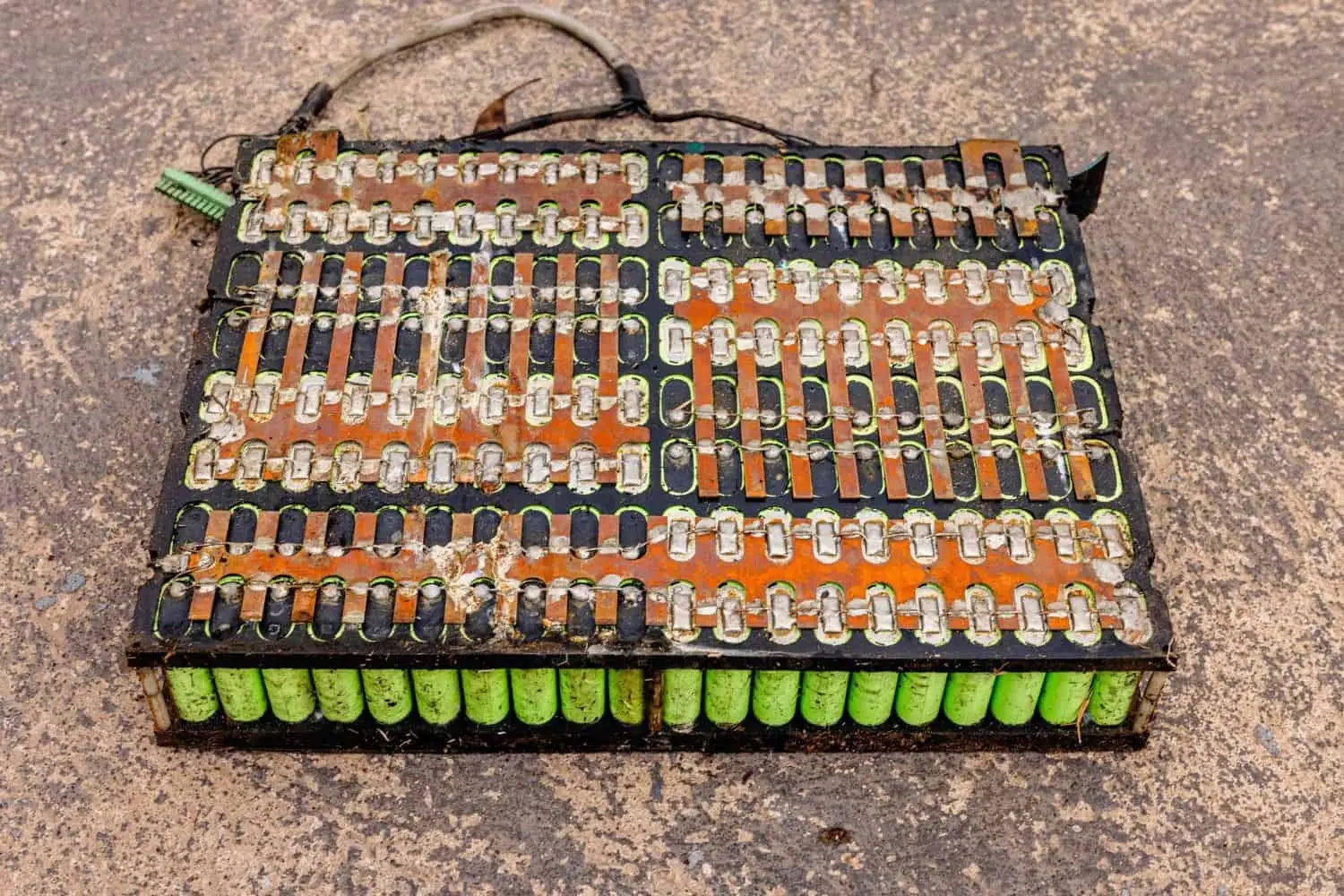
This photograph makes something normally hidden behind a battery enclosure visible.
Each cylinder is an individual cell. Electrical connections combine the cells so that they can deliver the voltage and storage capacity required by the battery design.
Not every solar battery looks like this internally. Manufacturers use different cell formats, chemistries, module arrangements and protection strategies.
That is why simply referring to a product as a “lithium battery” tells you relatively little about the quality or safety of the complete system.
When comparing battery proposals, ask which exact battery model is being supplied, which inverter it will be paired with and how the two are intended to communicate and operate together.
What is thermal runaway?
Thermal runaway describes a condition where reactions inside a battery cell generate heat faster than that heat can dissipate.
As temperature rises, further reactions can generate still more heat. In a severe failure, this can result in the release of hot gases, smoke, fire or other hazardous material.
The important issue at module level is propagation.
If sufficient heat from one failing cell reaches neighbouring cells, those cells can also be affected. A localised cell failure can therefore develop into a larger battery event under some conditions.
Fault or damage
A cell moves outside its intended operating conditions.
Temperature rises
Internal reactions begin producing heat faster than it can escape.
Thermal runaway
The rising temperature drives further heat-producing reactions.
Propagation risk
Heat may affect neighbouring cells or modules.
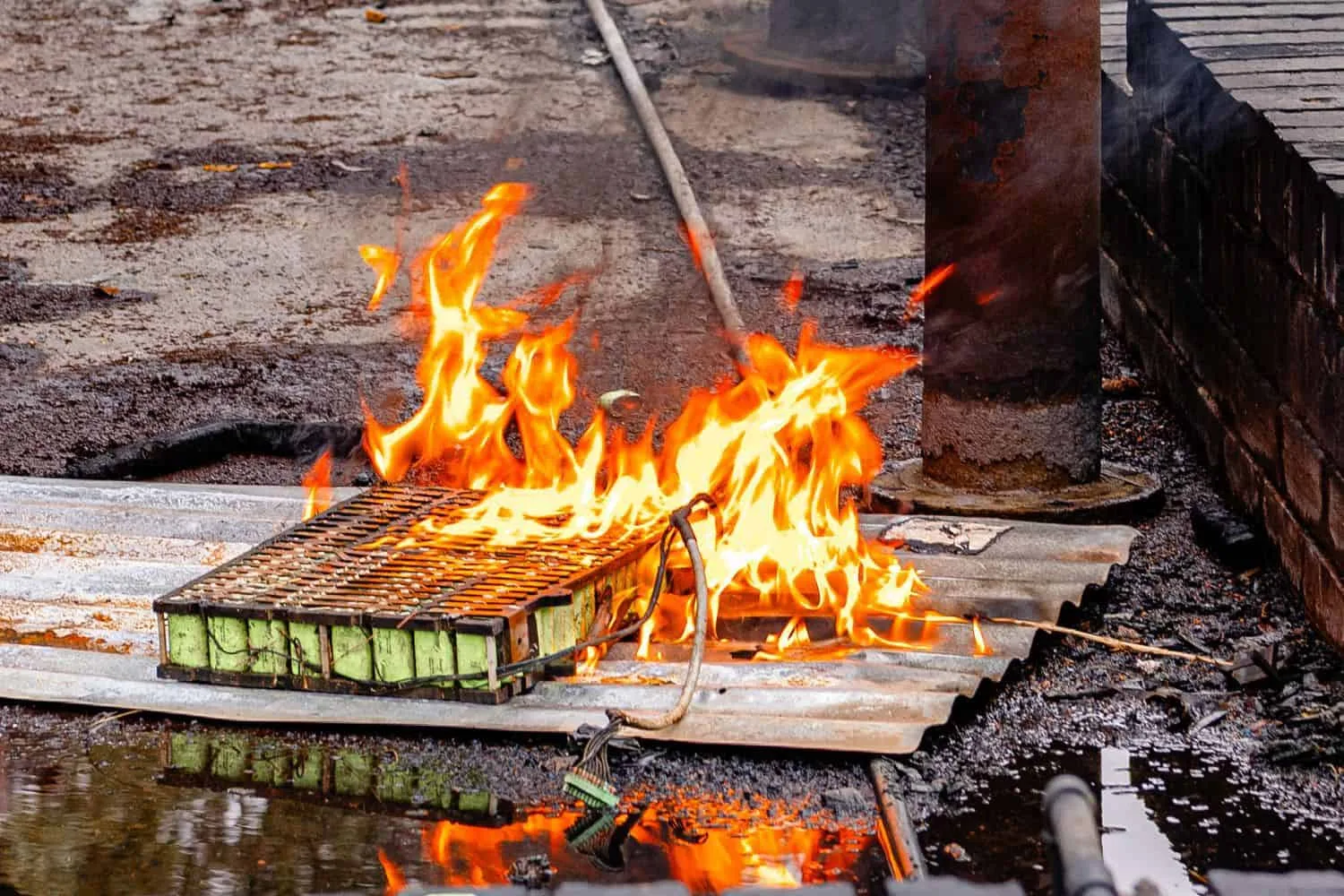
Photographs like this are useful for understanding the potential consequences of thermal runaway, but they should not be used to suggest that every lithium battery is likely to catch fire.
The actual risk associated with an installation depends on the battery technology, product design, electrical system, installation conditions, protection, operation and maintenance.
This is also why recognised battery testing matters. UL 9540A, for example, is a test method used to evaluate thermal runaway and fire propagation behaviour at cell, module and larger system levels.
It should not be interpreted as a generic “fireproof” certificate. Technical evidence still needs to be relevant to the actual equipment and arrangement being installed.
What does the battery management system do?
Modern lithium battery systems generally incorporate a battery management system, usually referred to as the BMS.
The BMS monitors operating conditions within the battery and helps keep the cells within the limits defined by the manufacturer.
Depending on the product, it may monitor factors such as:
- individual cell voltages;
- battery temperature;
- charging and discharging current;
- state of charge;
- cell balancing; and
- fault or alarm conditions.
If an unsafe operating condition is detected, the BMS can instruct the system to limit or stop charging or discharging.
But a BMS cannot make a poor installation safe.
The battery still has to communicate correctly with the inverter. The inverter has to respond appropriately to battery instructions. Suitable electrical protection and isolation need to be installed. Equipment must operate within the conditions specified by its manufacturers.
The BMS is therefore one protective layer within a larger engineered system.
Battery safety is really system safety
This is the part that can easily be missed when comparing solar quotations.
A recognised battery brand and a recognised inverter brand do not automatically create a good system simply because both products are individually reputable.
The installation team still needs to determine:
- whether the battery and inverter are compatible;
- how they will communicate;
- appropriate battery and inverter settings;
- cable sizing;
- electrical protection;
- isolation arrangements;
- earthing requirements;
- the connection to the existing electrical installation;
- equipment location and environmental conditions;
- how faults and alarms will be handled; and
- how the completed installation will be tested and commissioned.
For larger commercial installations, the battery may also interact with generators, solar PV, switchgear, transformers and LV or HV distribution.
This is why Zamori approaches solar and battery storage as part of the wider electrical system. Its solar team works alongside its electrical engineering capability, covering solar integration, backup power, electrical distribution, protection, testing and commissioning.
Why an experienced installation team matters
The installer is responsible for turning individual components into a functioning system.
That requires more than mounting equipment neatly on a wall.
An experienced team should first understand the property’s energy requirements and existing electrical infrastructure. It should then select compatible equipment, design the electrical integration, install appropriate protection and configure the equipment according to the intended operating strategy.
The completed system should be tested and commissioned, not merely switched on and assumed to be correct.
A proper handover should also leave the owner with useful documentation, including the relevant equipment information, system settings, commissioning records and electrical compliance documentation applicable to the work performed.
Zamori’s solar offering covers the process from site assessment and system design through installation, battery storage, electrical integration and ongoing maintenance for residential, commercial and industrial installations.
Where the battery is installed matters too
A convenient empty wall is not automatically an appropriate battery location.
Battery manufacturers specify installation conditions for their products, and the wider site also needs to be considered.
Depending on the project, the assessment may need to consider:
- manufacturer installation requirements;
- temperature and environmental conditions;
- ventilation or thermal-management requirements;
- access for maintenance;
- surrounding combustible materials;
- water exposure;
- vehicle or impact risks;
- electrical cable routes;
- occupancy and escape routes; and
- access during an emergency.
The requirements for a residential garage will not necessarily be the same as those for a factory, warehouse, shopping centre or commercial battery room.
That is another reason battery location should be treated as a project-specific engineering decision rather than an afterthought once the equipment arrives.
Questions to ask before accepting a solar battery quotation
| Question | What you should understand |
|---|---|
| Which battery am I getting? | The exact manufacturer and model, battery chemistry, storage capacity, warranty and relevant technical documentation. |
| Is it compatible with the inverter? | The approved equipment combination and how communication between the inverter and battery will work. |
| Why is this the right size? | How storage capacity and inverter power were determined from your electricity use and backup requirements. |
| Why is it being installed here? | How the location takes account of manufacturer requirements, environment, access and the specific property. |
| What electrical protection is included? | How the system will be isolated and protected and how it integrates with the existing electrical installation. |
| What happens when there is a fault? | What the battery and inverter monitor, which automatic actions occur and which warnings the owner will receive. |
| Who commissions the system? | Who verifies that the completed installation operates correctly and records the final configuration. |
| What documentation will I receive? | Relevant manuals, warranty information, commissioning records and electrical compliance documentation. |
| Who maintains it afterwards? | The recommended inspection programme, monitoring responsibilities and who to contact when faults occur. |
These questions help distinguish between a battery being sold as a product and a complete energy system being properly designed and installed.
Battery safety does not stop at installation
Solar and battery systems are long-term electrical assets.
Conditions change after installation. Electrical connections age, firmware and settings may be updated, property loads change and new equipment may be connected. Dust, water, heat or other environmental conditions can also affect equipment over time.
Monitoring and maintenance therefore form part of battery safety.
Owners should take repeated alarms seriously rather than continually clearing them. Unexpected changes in battery performance, charging behaviour or backup duration deserve investigation if there is no obvious change in electricity use.
A professional maintenance visit may include review of battery and inverter alarms, operating conditions, electrical connections, protection equipment, ventilation or cooling conditions and the wider installation.
Zamori provides ongoing solar and battery maintenance, including support for existing systems and installations completed by other contractors.
For a practical maintenance schedule, see our Solar System Maintenance Checklist for South African Homes and Businesses.
Battery warning signs that should not be ignored
Contact an experienced solar or electrical technician if the system develops repeated battery or inverter alarms, unexplained shutdowns or a significant change in normal charging and backup behaviour.
Some conditions require a different response.
Act from safety
If a battery smokes, hisses, swells or burns
Move away from the affected area, alert other people and contact emergency services from a safe location.
Tell emergency responders that a battery energy storage system is involved. Do not approach the equipment to investigate it, open the enclosure, move the battery or attempt to disconnect the system yourself.
A battery incident may remain hazardous even if visible flames have stopped, so follow the instructions of the attending emergency and technical professionals.
The important decision is bigger than the battery brand
Battery technology has improved enormously, and modern energy storage can provide reliable backup power and allow homes and businesses to make far better use of their solar generation.
But the battery should never be considered in isolation.
Safe, dependable energy storage comes from matching good equipment with good engineering: appropriate system design, compatible components, correct electrical integration, suitable protection, careful installation, proper commissioning and ongoing maintenance.
That is what turns a battery cabinet into a reliable part of a property’s energy infrastructure.
Solar & battery storage in Pretoria and across South Africa
Planning a new battery system or concerned about an existing one?
Zamori Engineering Services designs, installs, integrates and maintains residential, commercial and industrial solar and battery-storage systems.
Our team can assess the existing electrical installation, electricity requirements, inverter and battery compatibility, system protection and equipment location before recommending the appropriate solution.
We can also inspect and maintain existing solar and battery installations, including systems originally installed by another contractor.
Request a solar & battery assessment
Explore solar power solutions
Sources include Discovery Insure and Fire Ops SA, UL Solutions and manufacturer technical guidance. This article provides general educational information. Battery and electrical installation decisions require the relevant equipment instructions, applicable South African requirements and a competent professional’s assessment of the specific installation.